
Micron-Level Accuracy: How the 10W UV Laser Marking Machine Achieves 0.01mm Repeatability
Optical Design Fundamentals: 355nm Wavelength, <10μm Spot Size, and Sub-3μm Positioning Stability
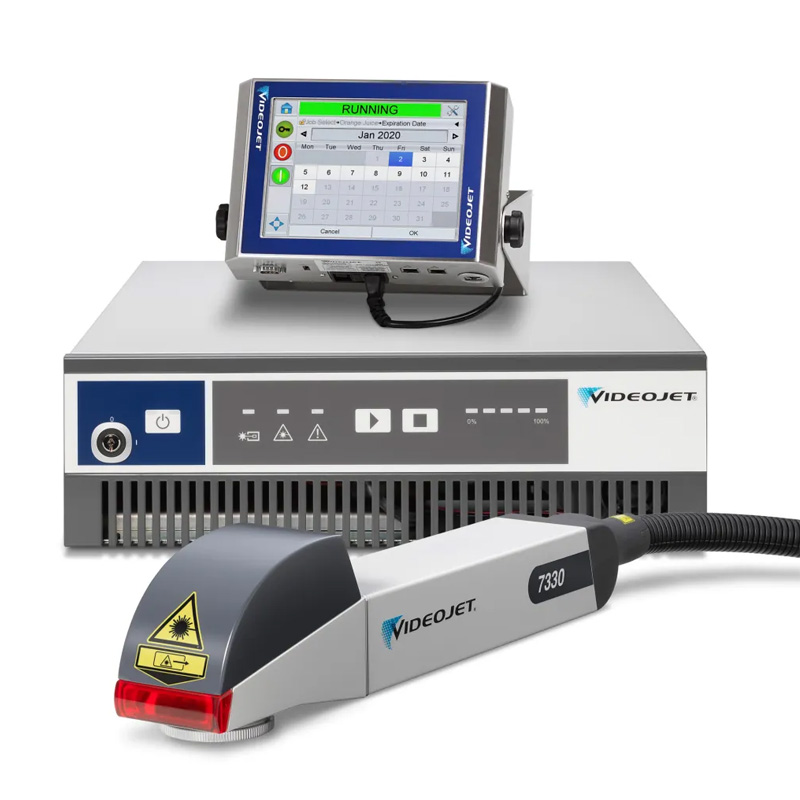
A 10 watt UV laser marking system can hit repeatable accuracy down to 0.01 mm thanks to its built in optical precision technology. The machine works at a wavelength of 355 nanometers which gives photons over 5 electron volts of energy. This level is enough for photochemical ablation instead of just melting materials thermally. As a result, we get spots smaller than 10 microns in diameter, making them about thirty times sharper compared to standard CO2 lasers. For keeping everything aligned properly, these machines use precision galvanometers with feedback loops that keep the beam stable within 3 microns or better. They also compensate for temperature changes in real time to prevent any drifting caused by environmental factors. Special air bearing systems take care of mechanical issues like hysteresis so performance stays consistent even during long production runs. All this makes possible direct part marking of tiny identification codes right onto things like medical implants and semiconductor parts without needing any extra finishing steps afterward.
Real-World Performance Validation: Measuring Consistency Across Stainless Steel, Polyimide, and Ceramic
Tests in real industrial settings have shown that the system maintains impressive position accuracy down to 0.01mm when working with tough materials. When tested on surgical grade stainless steel, it managed to keep within just +/- 0.0025mm repeatability even after going through 10 thousand complete cycles. For polyimide films, there was absolutely no sign of peeling or burning at 20 kilohertz pulse rates, which is really important for tracking components in flexible electronics manufacturing. The results were equally good with aerospace quality ceramics, where tiny 0.015mm lettering remained clearly visible at 98% contrast strength despite being subjected to extreme temperature changes between minus 40 degrees Celsius and 150 degrees. What makes all these different material performances possible? It comes down to how evenly the UV light gets absorbed across surfaces. This approach prevents those annoying issues like uneven expansion and small cracks that often plague infrared laser systems, especially during production runs with lots of mechanical vibrations.
Cold Marking Advantage: Photochemical Ablation Without Thermal Damage
Non-Thermal Bond Disruption vs. Conventional IR/CO₂ Lasers: Why 355nm Enables Zero HAZ
The 355nm UV laser works differently compared to traditional IR or CO2 lasers that depend on heat transfer processes. These conventional options typically create heat affected zones ranging between 50 to 200 micrometers. But with the UV technology, we get what's called true cold marking because it breaks molecular bonds directly without generating heat. The high energy photons let us achieve spot sizes under 10 micrometers while completely avoiding issues like thermal stress damage, carbon buildup, and changes to material structure. Testing by third parties has shown something remarkable too. Heat affected areas drop dramatically from around 150 micrometers when using IR lasers down to practically nothing with this UV approach. This makes all the difference for materials that are prone to cracking or sensitive to temperature changes.
Material Integrity Preserved: Demonstrated on Heat-Sensitive Electronics and Sterilizable Medical Components
The non thermal approach actually keeps things working properly when regular laser methods tend to mess things up. Take polyimide flexible circuits for instance they still conduct electricity just fine after being marked. Medical grade PEEK material holds onto about 99.8 percent of its tensile strength even after going through marking processes and then getting autoclaved too. Implantable titanium surfaces are another story worth noting these maintain their resistance to corrosion and stay biocompatible according to ISO 10993 standards. When it comes to FR4 printed circuit boards there's absolutely no sign of delamination happening. What's really impressive is that the markings we put on components can survive well over a thousand sterilization cycles. This means manufacturers get permanent traceability features without having to worry about their components losing any important performance characteristics along the way.
Meeting Critical Industry Standards: UDI, IPC, and AS9100 Compliance with the 10W UV Laser Marking Machine
The 10W UV laser marking machine delivers the micron-level precision required to meet globally recognized traceability standards—including FDA 21 CFR Part 830, ISO 13485, IPC-A-610, and AS9100—without secondary finishing or verification steps.
Medical Devices: Achieving UDI-Readable 0.02mm Features on Implantable Metals and Biopolymers
The system meets UDI standards by creating features that resist corrosion and can be scanned, even when they're tiny - as small as 0.02mm on titanium implants and certain sterilizable biopolymer materials. With photochemical ablation, there are no bumps or rough spots left behind where bacteria might hide. These high contrast DataMatrix codes stay readable and don't get damaged after going through multiple rounds of autoclaving or coming into contact with harsh chemicals. This means manufacturers won't have trouble during FDA inspections or when following ISO 13485 guidelines for quality management systems.
Electronics & Aerospace: High-Contrast, Non-Contact Marks on FR4 PCBs, IC Packages, and Titanium Alloys
In electronics and aerospace, the 355nm wavelength generates crisp, non-invasive identifiers on delicate substrates:
- Permanent, lead-free labeling on FR4 circuit boards
- Lot codes on IC packages without silicon damage
- AS9100-compliant part numbers on titanium turbine blades
The non-contact method avoids mechanical stress, and <10 μm spot sizes ensure IPC-A-610 Grade 3 legibility for QR codes, serial numbers, and micro-text—even on curved or uneven surfaces.
Optimizing Operational Parameters to Sustain Precision on the 10W UV Laser Marking Machine
Keeping 0.01mm repeatability in place needs careful attention to both process parameters and environmental conditions. For best results, focus on these main factors: laser power should stay between 5 to 10 watts, marking speed ranges from around 200 up to 2000 mm per second, and pulse frequency typically works well between 20 and 200 kilohertz. When working with sensitive materials like biopolymers or thin films, using lower power settings combined with multiple passes helps avoid excessive heating issues. The ability to adjust pulse frequencies becomes really important for achieving that sub-3 micrometer level of positioning stability. Environmental controls matter too. Try to keep temperatures stable within about plus or minus 2 degrees Celsius, and watch humidity levels closely they shouldn't go above 60%. These controls become absolutely essential when marking aerospace grade titanium components where even small variations can cause problems.
Galvanometer calibration must be performed weekly using ceramic reference plates to verify 0.01mm repeatability. Lens cleaning every 48 operating hours with anhydrous ethanol ensures optimal beam focus and spot fidelity. Structured operator training—emphasizing real-time energy monitoring and automated focal length adjustment for irregular geometries—reduces setup errors by 70%.
| Maintenance Factor | Precision Impact | Optimization Frequency |
|---|---|---|
| Optical path alignment | Prevents ±5μm beam deviation | Bi-weekly |
| Cooling system inspection | Maintains <0.5°C wavelength shift | Weekly |
| Marking head calibration | Ensures 0.001° angular accuracy | Per 500 operating hours |