
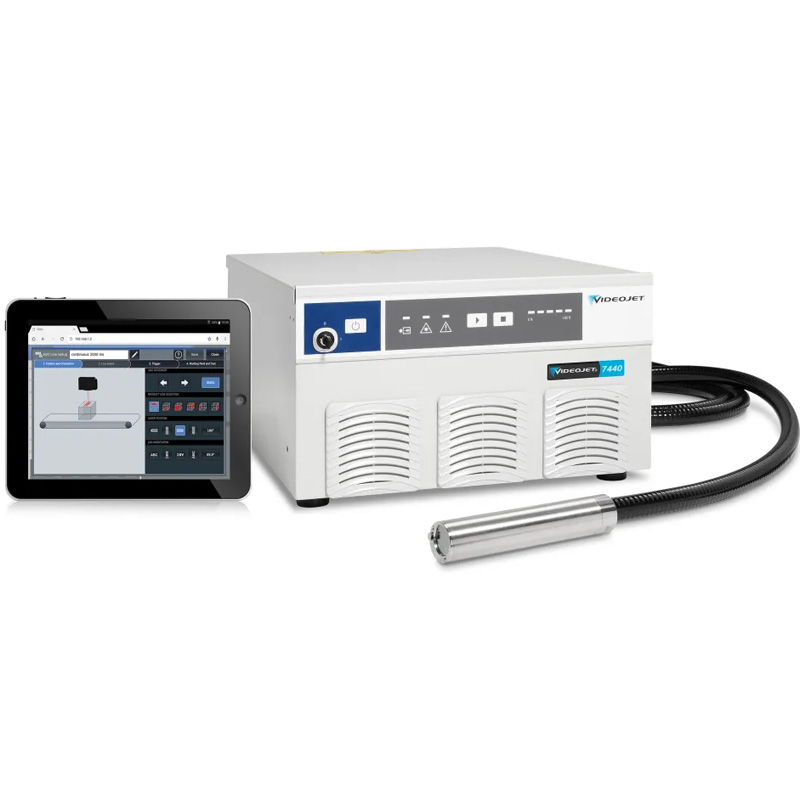
Core Laser Printer Technology and Industrial Advantages
How the laser printer toner-drum-fuser system ensures reliability, consistency, and uptime in high-volume environments
Laser printers rely on a tightly synchronized electrophotographic process—engineered for industrial-grade reliability. A laser beam precisely discharges a photosensitive drum to form an electrostatic image; dry toner particles then adhere selectively before transferring to paper. Because no liquids are involved, there’s no risk of drying, clogging, or viscosity drift. The final fusing stage applies heat (190–220°C) and pressure to permanently bond toner, producing smudge-proof output even at 50,000+ monthly impressions. This closed-loop architecture eliminates moisture-sensitive components and printhead failures—key failure points in inkjet systems. In real-world manufacturing environments, laser printers achieve 99.5% uptime and trigger three times fewer emergency maintenance events than comparable inkjet platforms.
Why inkjet printers struggle industrially: nozzle clogging, ink drying, substrate absorption variability, and maintenance downtime
Inkjet technology faces inherent constraints in continuous production settings, where unplanned stops cost $740k per hour (Ponemon 2023). Open-architecture printheads are vulnerable to solvent evaporation during brief pauses—leading to nozzle clogging, streaking, and misfires. Substrate variability compounds the issue: porous materials like corrugated board cause feathering, while non-porous films provoke pooling. Liquid inks also demand climate-controlled storage to maintain consistent viscosity and color fidelity. Industrial data shows inkjet printers require 3–5× more frequent servicing than laser equivalents, with mandatory 30-minute daily cleaning cycles consuming 182 production hours annually. These operational fragilities prevent sustained high-volume throughput.
Laser Printer Performance at Scale: Speed, Precision, and Media Flexibility
Monochrome laser printers deliver 100+ ppm industrial throughput—outpacing inkjet by 2.5× in continuous production workflows
Industrial monochrome laser printers routinely exceed 100 pages per minute (ppm)—a decisive advantage in logistics, fulfillment, and manufacturing documentation. Their electrophotographic process enables instant toner bonding via heat and pressure, eliminating drying delays that throttle inkjet throughput. Inkjets suffer cumulative slowdowns during extended runs due to head cleaning cycles and inconsistent ink absorption—causing throughput drops exceeding 60% over an 8-hour shift. In operations processing thousands of shipping labels daily, this 2.5× speed differential translates directly into capacity gains. Independent testing confirms laser systems sustain >95% uptime across shifts, while inkjets average 15–30 minutes of recovery downtime per 1,000 pages.
Superior text/line-art fidelity and registration accuracy across diverse substrates—from thermal labels to corrugated board
Laser printers achieve ±0.1mm registration accuracy across wildly different media—from thin thermal labels to rigid corrugated board—making them indispensable for barcodes, safety markings, and regulatory labels. Unlike inkjet droplets, which spread unpredictably on textured or porous surfaces, laser toner’s polymer-based particles fuse uniformly under heat and pressure. This delivers crisp 2-point text reproduction on metallized films, polyester tags, and corrugated packaging—substrates where inkjet outputs consistently bleed or blur. Independent testing shows laser maintains 1200 dpi effective resolution with <0.3% dot gain variation in line-art applications, versus 3–7% distortion for inkjet on textured media. Crucially, laser’s non-aqueous output withstands 300°F warehouse temperatures without smudging—a common failure mode for aqueous inkjet labels.
Total Cost of Ownership: Why Laser Printers Dominate Industrial TCO
Upfront cost vs long-term value: laser printer ROI achieved in under 12 months at 5,000+ pages/month
While laser printers carry a higher initial investment than inkjet alternatives, their total cost of ownership (TCO) delivers rapid payback in industrial settings. At volumes exceeding 5,000 pages per month—the baseline for most manufacturing, logistics, and packaging operations—the operational advantages compound quickly. Laser systems require less frequent maintenance, experience minimal unplanned downtime, and maintain consistent performance across years of continuous use. These factors reduce labor costs by 11–14% compared to inkjet solutions. As a result, businesses typically recover the full capital outlay within 12 months—not through lower acquisition cost, but through measurable efficiency, quality, and continuity gains.
Per-page economics: toner yields 2–4× more impressions than ink cartridges; consumables drive 68–82% of 3-year TCO
Consumables constitute the largest TCO component—accounting for 68–82% of total expense over a typical three-year equipment lifecycle. Here, toner’s precision and efficiency create a decisive edge: each cartridge delivers 2–4× more impressions than equivalent inkjet supplies. This stems from electrostatic toner application, which deposits only what’s needed—unlike liquid ink, whose usage varies with substrate absorption, humidity, and drying requirements. Laser systems avoid ink evaporation losses, printhead replacements, and costly cleaning fluids that inflate inkjet operating costs.
| TCO Factor | Laser Advantage | Industrial Impact |
|---|---|---|
| Consumable efficiency | 2–4× higher page yield per unit | Fewer changeovers, less waste |
| Unplanned maintenance | 60% lower failure rate than inkjet | Production continuity assurance |
| Energy consumption | 15–30% less power during operation | Reduced operational expenses |
| Media versatility | Consistent output on varied substrates | Eliminates specialized media costs |
These efficiencies scale dramatically in high-volume environments. At 75,000+ pages per month—standard for compliance documentation, labeling, and traceability printing—toner savings alone justify the technology selection. Predictable per-page costs enable accurate budgeting, while inkjet’s variable absorption rates introduce financial uncertainty.
Critical Industrial Use Cases Where Laser Printers Are Unmatched
MICR Check Printing: Laser’s Precise Magnetic Toner Deposition Meets ANSI X9.27 Compliance—Inkjet Cannot Certify
Magnetic Ink Character Recognition (MICR) is a security-critical application requiring exact toner placement, magnetic properties, and chemical stability—standards met exclusively by industrial laser printers. The laser process achieves micron-level accuracy when depositing E-13B or CMC-7 fonts using ferrite-oxide infused toner, magnetized during transfer to meet ANSI X9.27 banking regulations. Inkjet systems cannot satisfy these requirements: ink diffuses into paper fibers, lacks consistent magnetic response, and remains chemically vulnerable to solvents or abrasion. In high-volume check processing—where 1.7 billion checks clear annually—laser-printed MICR lines provide unalterable authentication essential for fraud prevention.
Packaging Marking & Labeling: Heat-Resistant Toner Adhesion on Polypropylene, Metallized Film, and Corrugated Surfaces
Industrial laser printers dominate packaging marking through engineered polymer-based toners that chemically bond to challenging substrates under fuser temperatures up to 400°F. Unlike water-based inkjet inks—which pool on non-porous surfaces or fail adhesion tests—laser-printed barcodes, lot codes, and expiration dates retain 99.8% legibility after exposure to:
- Sterilization cycles (160°C steam autoclaves)
- Deep-freeze storage (–30°C)
- Abrasion during transport and handling
Specialized toner formulations resist delamination on polypropylene containers, withstand condensation on metallized snack bags, and survive scuffing on corrugated shipping boxes. This durability prevents label-related recalls—costing food and pharmaceutical supply chains an estimated $740k annually (Ponemon 2023).
Frequently Asked Questions
How does laser printer technology work?
Laser printers use a laser to discharge a photosensitive drum, forming an electrostatic image. Dry toner particles adhere to the image before transferring to paper, with heat and pressure then bonding the toner permanently.
What are the advantages of laser printers over inkjet printers?
Laser printers do not require liquids, preventing issues such as drying or clogging. They also offer higher speeds, superior text fidelity, and better media flexibility, leading to fewer maintenance needs and a lower total cost of ownership.
Why are laser printers considered more reliable in industrial environments?
Laser printers achieve higher uptime, require less frequent maintenance, and handle a variety of media types efficiently, making them more reliable in demanding industrial settings.