
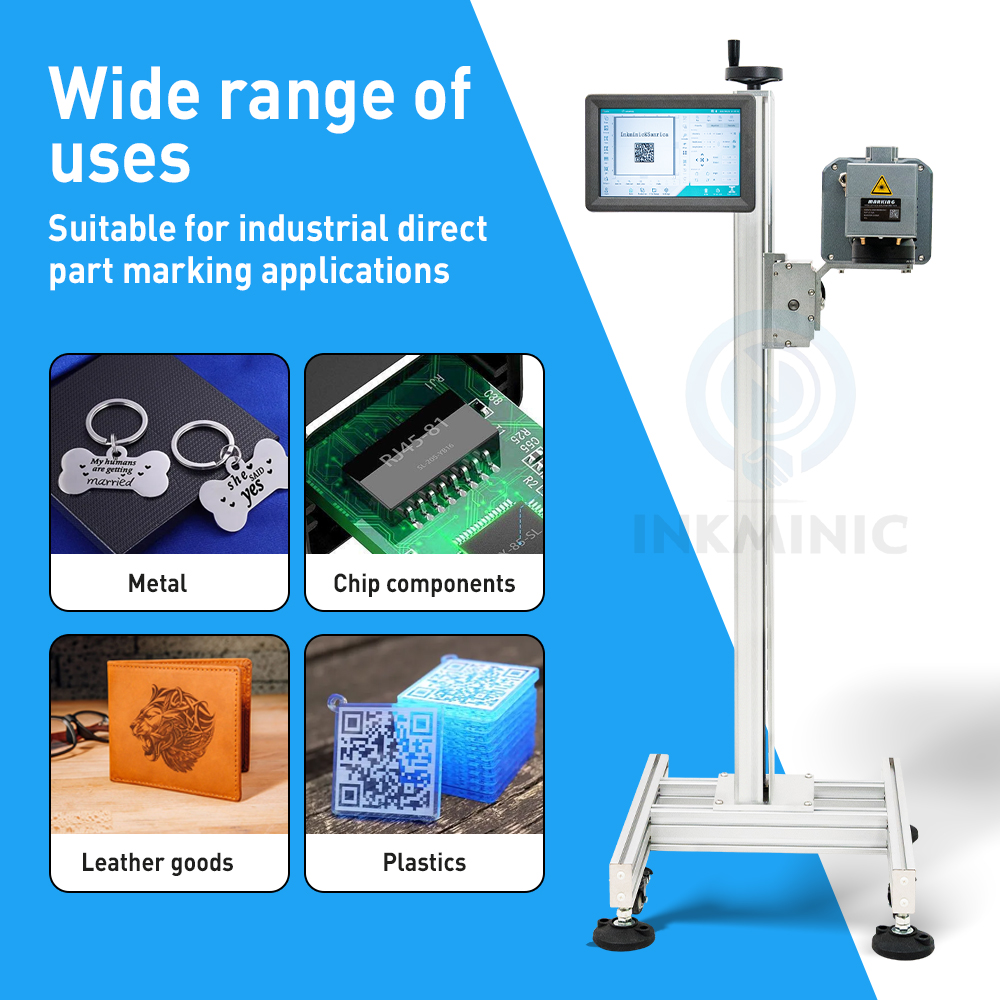
Core Industrial Requirements for High-Speed Laser Printer Performance
Throughput benchmarks: Aligning laser printer speed with production line velocity and uptime goals
Industrial laser printers must sustain speeds exceeding 75 ppm to avoid bottlenecks in modern automated lines. Validation occurs via 20-hour stress tests under real-world conditions—including conveyor synchronization at ≥30 m/min. With downtime costing over $15,000/hour (Manufacturing Insights 2023), ≥98% uptime during peak shifts is non-negotiable. Critical throughput metrics include:
- Job completion time: Must align precisely with takt time calculations
- Buffer capacity: Minimum 500-page input trays to prevent workflow interruptions
- Error recovery: Automatic resumption after paper jams within ≤15 seconds
Critical operational constraints: Duty cycle, thermal management, and continuous-run reliability
True industrial operation demands 24/7 readiness and a duty cycle rating that supports sustained high-volume output—not just occasional bursts. Advanced thermal regulation is essential to maintain stability during prolonged runs at 100+ ppm, especially when ambient temperatures exceed 35°C. Continuous-run reliability rests on three core engineering safeguards:
- Ceramic fuser units rated for 1 million+ cycles
- Optics protection against airborne particulates
- Automatic power conditioning for voltage stability
Top-tier models achieve an MTBF of 50,000+ hours through component redundancy and predictive maintenance—not just robust build quality, but embedded intelligence that anticipates failure modes before they impact output.
Laser Printer Technology Comparison: Fiber, CO₂, and UV for Speed-Critical Marking
Fiber laser printers: Superior speed and precision on metals at >10,000 mm/s
Fiber lasers lead in high-speed metal marking, delivering scanning velocities above 10,000 mm/s—more than triple the speed of conventional alternatives. Their solid-state architecture produces tightly focused, high-intensity 1064 nm beams ideal for photothermal marking. This enables permanent, deformation-free marks with ±5 μm positional accuracy—even at full speed. Field data shows 98% uptime in continuous production, attributable to sealed optics, no consumables, and inherent resistance to vibration and thermal drift.
CO₂ and UV laser printers: Material-specific trade-offs in marking speed, pulse stability, and substrate compatibility
CO₂ lasers (10,600 nm) excel on organic substrates like wood and acrylic but lose 30–50% speed on metals due to poor absorption. UV lasers (355 nm) enable cold marking on heat-sensitive materials such as medical plastics and glass—but their pulse stability limits top speed to ~3,000 mm/s. The key constraint remains material compatibility: CO₂ struggles with reflective metals; UV requires careful pulse modulation for dark or filled polymers.
| Parameter | CO₂ Laser Printers | UV Laser Printers |
|---|---|---|
| Peak Speed | 7,000 mm/s (organics) | 3,000 mm/s (plastics) |
| Pulse Frequency | Up to 100 kHz | Up to 200 kHz |
| Substrate Limits | Poor metal adhesion | Limited metal depth |
Key Laser Printer Specifications That Determine Real-World Marking Speed
Pulse frequency, galvo scanning speed, and beam delivery efficiency — how they jointly govern maximum throughput
Throughput isn’t dictated by laser power alone—it’s governed by the synchronization of three interdependent specifications:
- Pulse frequency (kHz): Determines how many discrete energy bursts strike the surface per second
- Galvo scanning speed: Modern fiber systems exceed 10,000 mm/s, enabling rapid beam repositioning across complex paths
- Beam delivery efficiency: Measured by M² factor (<1.3 ideal), it reflects how cleanly the beam focuses—minimizing energy loss and spot distortion
Misalignment collapses throughput: a 100 kHz pulse rate delivers no benefit if galvos can’t reposition fast enough to place each pulse accurately. Engineers consistently observe ~30% throughput loss when any one parameter falls short of line requirements. When fully synchronized, these systems achieve >7,000 characters/second—without sacrificing edge fidelity or positional repeatability.
Why laser printer power rating alone is misleading — the role of peak vs. average power and duty cycle
Marketing specs often highlight peak power (e.g., “100W”), but real-world performance hinges on average power—calculated as peak power × duty cycle. A 100W UV laser operating at only 20% duty cycle delivers just 20W of usable energy—less than a 60W system running at 70%. Thermal management failures during extended operation cause measurable quality degradation: field studies report up to 17% contrast loss and increased charring when average power exceeds thermal thresholds. High-duty-cycle systems sustain >5,000 mm/s speeds not through raw wattage, but through intelligent cooling, dynamic power scaling, and thermal feedback loops.
Optimizing Laser Printer Speed Without Sacrificing Mark Quality or Reliability
Spot size, focal depth, and parameter tuning to sustain >5,000 characters/second with legibility and repeatability
Ultra-high-speed marking (>5,000 characters/second) is achievable—but only when optical and process parameters are calibrated holistically. Three factors dominate success:
- Spot size optimization: Smaller diameters increase energy density for faster ablation—but sub-0.1mm spots risk thermal damage on thermally sensitive polymers. Optimal sizing balances speed with substrate tolerance.
- Focal depth control: On curved or uneven surfaces, inconsistent focus causes blurring at speed. Dynamic auto-focus systems correct depth variation in real time, preserving edge sharpness.
- Pulse parameter tuning: Adjusting frequency, pulse overlap (≥30%), and Q-switch modulation ensures efficient vaporization while maintaining crisp glyph definition and consistent contrast.
Industry benchmarks confirm that reliable high-speed serialization requires:
| Performance Metric | Minimum Threshold | Quality Impact |
|---|---|---|
| Beam positional accuracy | ±5 μm | Prevents glyph distortion |
| Pulse energy stability | ≤2% deviation | Ensures uniform contrast |
| Thermal recovery time | <0.5 seconds | Avoids charring on plastics |
Crucially, speed gains demand compensatory tuning: faster scanning often requires reduced pulse energy to minimize heat-affected zones. Leading installations pair high-speed galvanometers (≥5 m/s) with closed-loop thermal monitoring—achieving 99.9% legibility at speeds once considered incompatible with traceability-grade marking.
FAQ
What is the importance of duty cycle in industrial laser printers?
The duty cycle is crucial for ensuring sustained high-volume output and 24/7 readiness. It supports continuous operation without thermal failures, helping to maintain consistent marking quality during extended usage.
How do fiber lasers compare to CO₂ and UV lasers in terms of speed?
Fiber lasers lead in high-speed metal marking with speeds exceeding 10,000 mm/s, making them significantly faster than CO₂ lasers (with peak speeds of 7,000 mm/s on organics) and UV lasers (with top speeds around 3,000 mm/s for heat-sensitive materials).
What factors affect laser printer throughput?
Laser printer throughput is influenced by the synchronization of pulse frequency, galvo scanning speed, and beam delivery efficiency. Any misalignment among these can result in throughput loss and decreased performance.
Why is it misleading to focus solely on a laser printer's peak power?
Peak power does not accurately reflect real-world performance; average power, calculated as peak power multiplied by duty cycle, is more indicative. High-duty-cycle systems excel in sustaining speeds and performance through intelligent thermal management.