
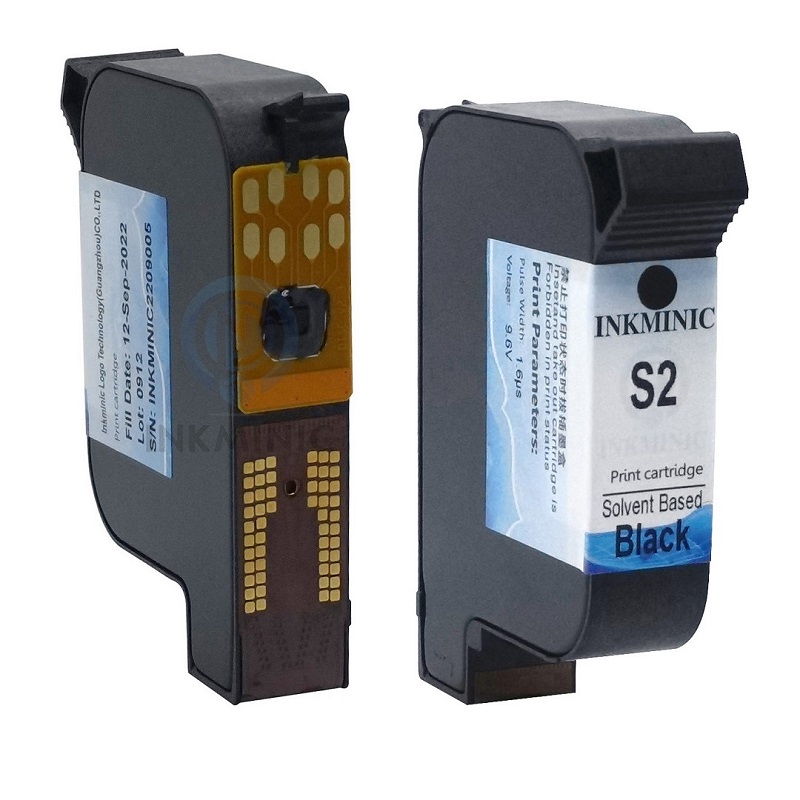
How Ink Cartridges Determine Print Quality in Industrial Applications
Droplet Precision, DPI, and Resolution Limits in High-Speed Printing
Industrial ink cartridges govern droplet precision through nozzle calibration and viscosity control—directly determining achievable DPI (dots per inch). At speeds exceeding 100 m/min, suboptimal cartridges induce satellite droplets and positional misalignment, degrading effective resolution by up to 40%. To sustain 1200+ DPI at production velocities, printheads demand consistent ink flow and thermal stability. Viscosity fluctuations from cartridge inconsistencies cause banding, dot gain, and edge blurring—especially detrimental for high-contrast applications like UDI-compliant medical device marking or GS1 barcode legibility. Production line validation shows that cartridge-specific waveform optimization reduces nozzle misfiring by 75%, enabling micron-level droplet placement essential for electronics labeling and regulatory-grade traceability.
Ink-Substrate Adhesion: Ensuring Legibility, Durability, and Regulatory Compliance
Ink-substrate adhesion is the foundation of industrial print durability—and a key determinant of regulatory compliance. Cartridge chemistry must align precisely with substrate surface energy: metal requires corrosion-inhibiting binders, polypropylene demands polar adhesion promoters, and corrugated board needs rapid-absorption formulations. Third-party cartridges often deliver 30% lower adhesion strength, risking ink rub-off during sterilization cycles, chemical exposure, or mechanical handling—compromising OSHA safety labels and FDA-mandated UDI permanence. Certified OEM cartridges maintain ASTM D3359 cross-hatch adhesion scores ≥4.5/5 after accelerated aging and resist dye migration in food packaging, meeting FDA 21 CFR Part 11 requirements for permanent, moisture- and abrasion-resistant marking.
How Ink Cartridges Influence Production Line Efficiency
Ink Consumption and Flow Consistency: Optimizing Throughput and Minimizing Downtime
Industrial ink cartridges shape production efficiency through engineered fluid dynamics. Consistent ink flow prevents nozzle starvation during sustained high-speed operation—preserving uninterrupted throughput critical for hourly output targets. Cartridges delivering stable viscosity (10–20 centipoise) reduce printhead purging cycles by 37%, according to flexographic efficiency studies, while minimizing material waste from under- or over-saturation. Pressure-regulated reservoirs eliminate air entrapment and pressure spikes, cutting daily downtime by up to 22 minutes per printer. The resulting 5–8% throughput gain reflects how precision cartridge engineering directly translates into measurable productivity and cost savings.
Printhead Maintenance Burden: Decap Time, Purging Cycles, and Ink Waste
Cartridge design dictates maintenance frequency via decap time—the maximum interval printheads remain idle without clogging. Industrial cartridges with advanced polymer seals extend decap tolerance to 120+ hours, more than doubling the industry average of 48 hours. This cuts scheduled purging cycles by 60% and reduces weekly ink waste from cleaning by nearly 200 ml per printer. Independent analysis confirms that cartridges with poor solvent retention trigger three times more emergency nozzle cleanings—consuming 18% of operational ink volume on maintenance rather than production. For mid-sized facilities, this inefficiency accumulates to $740,000 in annual losses (Ponemon Institute, 2023), underscoring how cartridge selection impacts both sustainability and ROI.
Original vs. Non-Original Ink Cartridges: Balancing Cost, Reliability, and Line Risk
Yield Variability and Unplanned Stoppage Rates Across OEM and Third-Party Ink Cartridges
OEM ink cartridges adhere to tight manufacturing tolerances, ensuring predictable yield within ±5% variance—critical for scheduling and just-in-time replenishment. In contrast, third-party alternatives exhibit up to 30% yield variability due to inconsistent ink formulation, reservoir geometry, and pressure regulation. High-volume facilities report 3–5× more unplanned stoppages when using non-original cartridges. Each interruption triggers mandatory printhead cleaning, consuming 15–20 minutes of productive time and disrupting line synchronization. These disruptions compound across shifts, eroding capacity and increasing labor overhead—making initial cost savings illusory when measured against total cost of ownership.
Printer Damage Risk and Long-Term ROI Impact on Line Uptime
Chemical incompatibility remains the most consequential risk of third-party ink cartridges. Substandard dyes and solvents leave corrosive residue, accelerating printhead wear and shortening service life by an average of 18 months. While third-party options offer ~40% lower upfront cost, long-term ROI deteriorates sharply when accounting for component failure, warranty voidance, and lost uptime:
| Cost Factor | OEM Cartridges | Third-Party Cartridges |
|---|---|---|
| Printhead replacement | 0.2x/year | 1.5x/year |
| Warranty coverage | Full | Voided in 78% of cases |
| Uptime impact | <2% downtime | 8–12% downtime |
Facilities prioritizing sustained operation achieve 30% higher annual throughput with OEM cartridges—not despite higher unit costs, but because reliability, consistency, and regulatory assurance compound into tangible productivity gains and risk mitigation.
FAQs
Why is droplet precision important in industrial ink cartridges?
Droplet precision is crucial because it affects the DPI and overall resolution of the prints. High droplet precision ensures clear and accurate prints, which is necessary for high-speed production and regulatory compliance in industrial settings.
What role does ink-substrate adhesion play in industrial printing?
Ink-substrate adhesion ensures the durability and legibility of prints, which is critical for meeting regulatory standards and ensuring labels or markings endure various handling processes or environmental exposures.
What are the risks of using non-original ink cartridges?
Non-original ink cartridges can cause yield variability, increase unplanned stoppages, lead to printer damage due to chemical incompatibility, and ultimately impact long-term ROI and line uptime.