
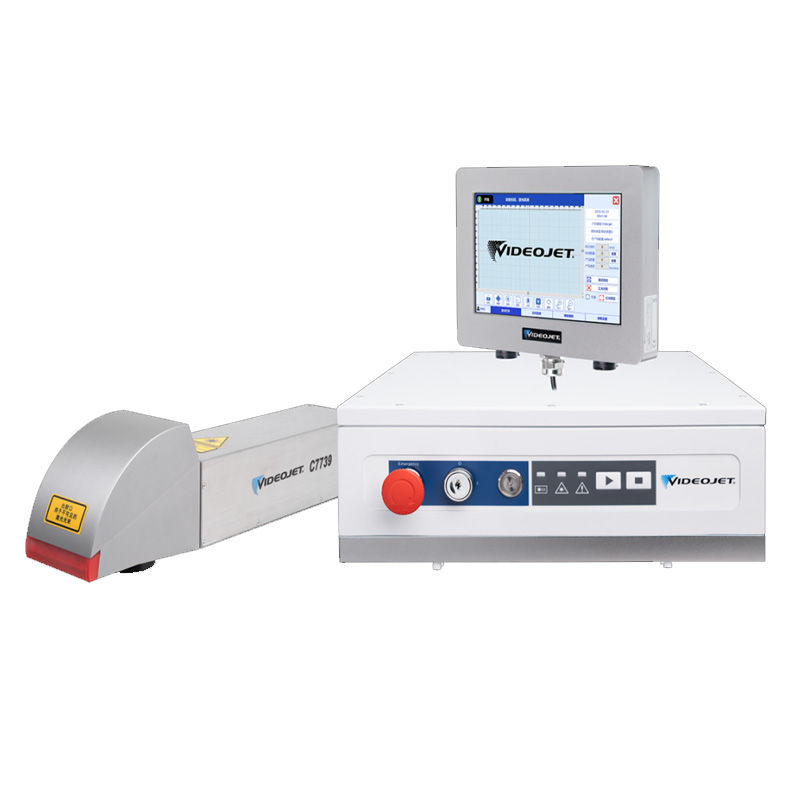
Why Industrial Laser Printers Are the Gold Standard for Permanent Direct Part Marking
Regulatory mandates across critical industries demand identifiers that cannot be removed, altered, or rendered unreadable over a product’s entire life. Industrial laser printers deliver exactly that — permanent, machine-readable direct part marks that survive extreme heat, chemicals, and abrasion. Their non-contact process eliminates contamination risk, while the mark itself becomes an integral part of the material surface — ensuring compliance from production through end-of-life.
Regulatory drivers: FDA UDI, EU MDR, AS9100, and MIL-STD-130 mandate non-removable, machine-readable identifiers
The U.S. Food and Drug Administration’s Unique Device Identification (UDI) rule and the European Medical Device Regulation (EU MDR) require medical devices to carry a permanent identifier that remains legible after repeated sterilization and years of clinical use. In aerospace and defense, AS9100 and MIL-STD-130 mandate indelible, human- and machine-readable Data Matrix codes capable of withstanding harsh environments, thermal cycling, and mechanical wear. Noncompliance can trigger rejected shipments, costly recalls, or regulatory penalties. Only industrial laser marking — which engraves, anneals, or stains identifiers directly into the substrate — delivers true permanence: removal is impossible without destroying the part. Unlike labels or chemical etching, laser marks require no adhesives, inks, or hazardous reagents, making them inherently compliant and audit-ready across the full product lifecycle.
Laser printer advantages over inkjet, dot peen, and chemical etching: precision, speed, material versatility, and zero consumables
Industrial laser printers outperform alternative marking technologies on durability, precision, and operational efficiency. Inkjet marks fade under solvents and UV exposure and rely on expensive, regulated inks. Dot peen creates shallow impressions vulnerable to wear and struggles with high-density 2D codes. Chemical etching demands hazardous waste handling, long cycle times, and limited repeatability. By contrast, lasers achieve micron-level accuracy at production-line speeds — often marking thousands of parts per hour — across metals, plastics, ceramics, glass, and coated surfaces. With no inks, ribbons, or etchants required, they eliminate consumable costs and disposal liabilities. A single system handles alphanumeric serial numbers, GS1-compliant barcodes, and ISO/IEC 15415–validated Data Matrix codes — all without tooling changes. This flexibility, reliability, and low total cost of ownership solidify laser marking as the gold standard for permanent identification.
End-to-End Traceability Powered by Integrated Industrial Laser Printer Systems
Real-time marking across the manufacturing lifecycle: casting → machining → assembly → packaging
Industrial laser printers embed traceability at every stage — starting with raw castings, where a unique Data Matrix code is permanently applied before any processing begins. After machining, the same system updates markings with revision levels, inspection stamps, or heat-treat indicators — eliminating manual labeling errors and workflow interruptions. During assembly, it applies serialized IDs to subassemblies, linking them directly to upstream process data like torque logs or weld parameters. On the packaging line, it simultaneously marks corrugated cases and shrink-wrapped bundles with batch IDs, expiration dates, and shipping manifests. This continuous, automated marking chain builds an unbroken digital thread from raw material to finished good. Gaps in traceability — where parts could be misidentified, duplicated, or lost — vanish. The result is a fully auditable record that accelerates recall response, simplifies warranty claims, and satisfies regulators during inspections — all without sacrificing throughput.
Seamless ERP/MES/WMS integration: synchronizing serial numbers, batch IDs, timestamps, and digital twin metadata
When integrated with enterprise systems, industrial laser printers evolve from marking tools into intelligent nodes in the digital factory. Connected to an ERP, the laser receives real-time job instructions — including serial number sequences, placement coordinates, and formatting rules — ensuring consistent, error-free application. A Manufacturing Execution System (MES) validates each mark using inline vision inspection calibrated to ISO/IEC 15415, approving only compliant codes before parts advance. Warehouse Management Systems (WMS) scan those same laser-marked codes to auto-update inventory location, quantity, and lot status. All marking events — timestamps, operator IDs, machine parameters, and quality pass/fail results — feed directly into a digital twin. This synchronized data flow eradicates manual entry errors and ensures every department accesses identical, up-to-date information. When anomalies arise, teams trace defects to specific machines, shifts, material batches, or even environmental conditions — enabling rapid root-cause analysis and closed-loop corrective action.
Compliance-by-Design: How Laser Printers Meet Industry-Specific Requirements
Medical devices: Validating Data Matrix marks per ISO/IEC 15415 and FDA UDI Rule §111.20
Medical device manufacturers must meet the FDA’s UDI requirements under 21 CFR Part 830 and §111.20 — mandating permanent, machine-readable identifiers that remain scannable throughout a device’s service life. Industrial laser printers produce high-contrast, ISO/IEC 15415–compliant Data Matrix codes directly on instruments, implants, and sterile packaging. Built-in vision validation confirms grade A–D readability before parts leave the station — ensuring compliance after autoclaving, ethylene oxide sterilization, and repeated handling. This validation-first approach satisfies both FDA expectations and EU MDR Annex I essential requirements, embedding compliance into the marking process itself rather than relying on post-hoc verification.
Aerospace & defense: Achieving MIL-STD-130 compliance with durable, corrosion-resistant alphanumeric and Data Matrix marks
MIL-STD-130 requires UID markings that endure decades of service in extreme conditions — from jet engine bays to naval vessels. Industrial laser printers meet this by producing deep, metallurgically bonded engravings on aluminum, titanium, stainless steel, and composites. Unlike ink-based or adhesive solutions, laser marks resist corrosion, thermal shock, abrasion, and solvent cleaning without fading or delaminating. They support both alphanumeric text and high-density Data Matrix symbols — all validated for contrast, cell size, and decode reliability per MIL-STD-130 Appendix B. Because no consumables are involved, maintenance is minimal and repeatability is assured across shifts and facilities — delivering consistent, audit-proof compliance across global supply chains.
FAQ
What industries benefit the most from industrial laser printers?
Industries like aerospace, medical devices, automotive, and defense benefit the most. These sectors require durable, permanent part markings to meet strict regulatory compliance and traceability standards.
How do laser printers ensure compliance with FDA and MIL-STD-130 standards?
Industrial laser printers produce permanent, machine-readable marks that meet FDA UDI and MIL-STD-130 requirements, ensuring legibility and durability under extreme conditions. Built-in vision systems validate markings for compliance before leaving the station.
What are the advantages of laser printers over traditional marking methods?
Compared to inkjet, dot peen, or chemical etching, laser printers offer superior durability, precision, material versatility, zero consumable costs, and the ability to handle high-density 2D codes.
Can laser printers handle multiple surfaces and materials?
Yes, they can mark various materials, including metals, plastics, ceramics, glass, and coated surfaces, with accuracy and durability.