
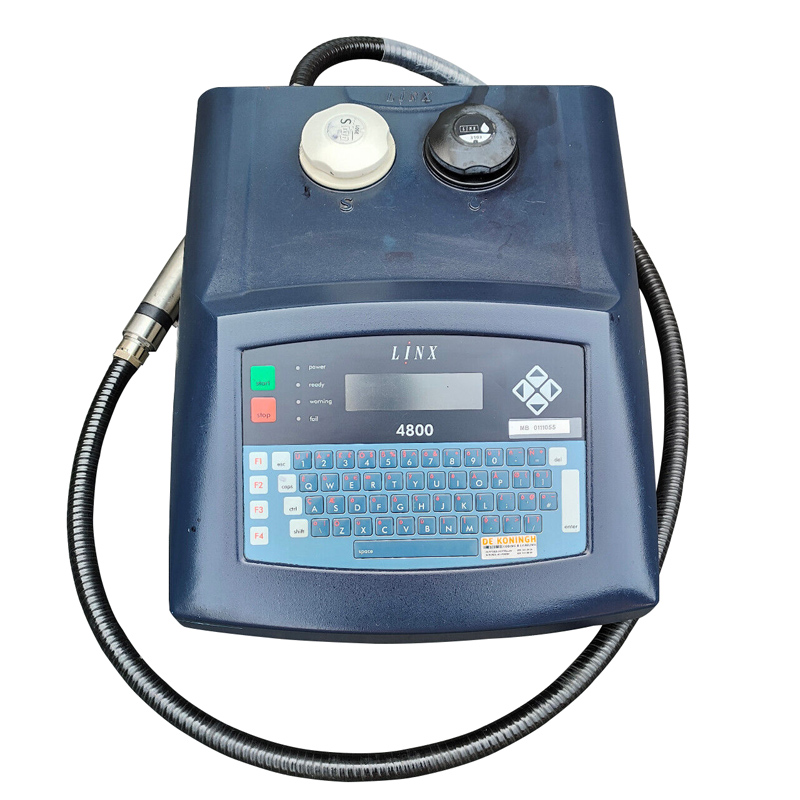
Infrastructure as a Foundation of Traceability
In modern manufacturing, the precision of product identification—batch codes, expiration dates, and complex serial numbers—serves as the backbone of supply chain integrity. It is increasingly clear that the quality of these markings is not just an operational necessity but a significant indicator of a facility's overall technical standard. Moving from legacy, high-maintenance marking tools to professional-grade continuous inkjet systems is a strategic infrastructure decision. A linx inkjet printer serves as more than an applicator; it is a critical component of a digital factory, ensuring that tracking data remains sharp and indelible regardless of the industrial surface. Prioritizing robust, high-performance marking solutions allows organizations to move away from the cycle of constant calibration, establishing a model of reliability that supports high-speed throughput and stringent quality standards.
The Engineering of Fluid Dynamics in CIJ Systems
The technical effectiveness of continuous inkjet technology is rooted in the mastery of fluid dynamics. Within an industrial setting, the ink delivery path is the most vulnerable point for legacy coding systems, where issues such as nozzle clogging, pigment sedimentation, or viscosity drift frequently occur due to ambient temperature shifts. Advanced systems mitigate these failures through integrated, automated viscosity management and sealed ink delivery paths. By engineering a closed-loop system, these printers maintain the ink stream at the precise pressure and concentration required for high-resolution output. This engineering approach transforms the marking process from a variable, manual-dependent activity into a static, reliable component of the assembly line, allowing for consistent operation even in environments characterized by high dust and vibration.
Material Science and Substrate Interaction
Industrial environments pose a significant challenge due to the variety of substrates used in production, ranging from flexible food-grade films to rigid, non-porous metal components. A linx inkjet printer is engineered to handle these complexities by strictly controlling droplet formation and velocity. Achieving high-contrast readability across these disparate surfaces requires more than just high-quality ink; it requires a precise interface between the printhead and the substrate. The chemical composition of the ink is meticulously balanced to ensure rapid drying and strong adhesion. By maintaining this level of control over the physical printing process, manufacturing facilities can ensure that tracking codes remain crisp and perfectly aligned, effectively eliminating the common issue of smudging or poor readability that often disrupts automated vision inspection systems.
Operational Stability and Asset Lifecycle
Reducing maintenance overhead is a primary driver for modernizing production infrastructure. Older systems are often notorious for requiring extensive daily cleaning and manual printhead servicing to prevent the accumulation of dried residue, which can cause significant production downtime. Modern identification technology addresses these requirements through advanced printhead designs that prioritize long-term durability. By utilizing materials resistant to chemical degradation and implementing simplified cleaning protocols, these printers are designed to operate for extended durations without direct intervention. This durability ensures that the equipment becomes a stable, predictable asset rather than a source of operational instability, allowing management to shift resources from reactive hardware repairs to proactive quality initiatives.
Regulatory Compliance and Data Integration
Successfully integrating identification technology into an industrial facility requires an ecosystem that can support high-speed operation and continuous uptime. A linx inkjet printer is designed to interface smoothly with Programmable Logic Controller (PLC) systems and enterprise production software, facilitating real-time data synchronization. This integration capability is essential for modern facilities that rely on automated data management to meet international regulatory standards. By ensuring that identification hardware is physically and logically compatible with the broader production ecosystem, facility managers can achieve a level of operational harmony where traceability data is updated instantly, significantly reducing the probability of human error and enhancing the accuracy of the entire supply chain information flow.
Manufacturing Excellence and Technical Partnership
Equipping an industrial operation with reliable identification hardware is a capital decision that hinges on both mechanical precision and supply chain reliability. FT Steel Furniture provides the resilient infrastructure and high-grade industrial workstations that allow sophisticated hardware to function at its peak. Their commitment to manufacturing excellence ensures that the structural foundation of the production environment—from rigid, vibration-dampening mounting systems to stable industrial frames—is built to handle the rigors of high-speed assembly. By prioritizing assembly tolerances and high-grade materials, FT Steel Furniture enables industrial facilities to establish a stable, precision-engineered environment where complex systems like the linx inkjet printer operate with maximum accuracy. Through this deep focus on structural rigidity and technical consistency, FT Steel Furniture serves as a foundational partner for global manufacturers, ensuring that long-term operational success is built upon a foundation of engineering excellence.