
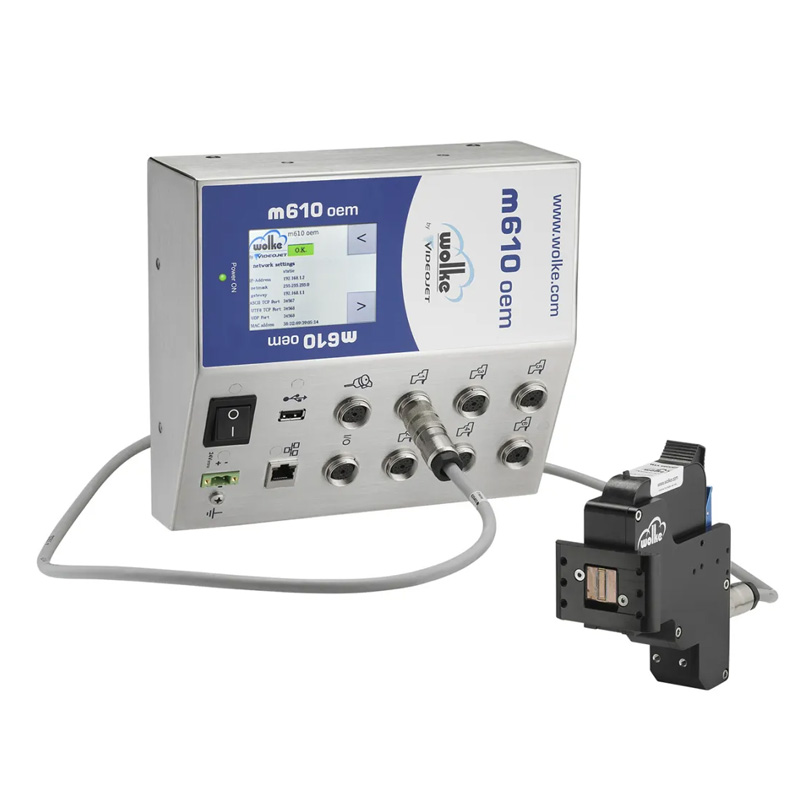
The Paradigm Shift in Industrial Identification
In the fast-moving world of modern manufacturing, the traditional model of offline product marking—where items are removed from the line to be coded—is rapidly becoming obsolete. Today’s high-throughput assembly environments require identification systems that are integrated directly into the production flow. The adoption of the online inkjet printer represents a critical transition in industrial engineering. By moving identification to the point of production, manufacturers can apply batch codes, date stamps, and unique serialized identifiers the very moment a product is finalized. This direct integration not only ensures that every unit is immediately traceable but also eliminates the physical handling and secondary staging that often lead to identification errors and logistical bottlenecks.
The Physics of High-Speed Fluid Dynamics
Engineering a marking system that keeps pace with a high-speed conveyor requires a deep understanding of fluid dynamics. In practice, the primary challenge of an online inkjet printer is maintaining perfect droplet placement when the substrate is moving at significant velocity. If the timing and trajectory of each microscopic ink drop are not calibrated with micron-level accuracy, the resulting code will suffer from blurring or "tailing." Modern industrial printers solve this through sophisticated printhead electronics that adjust firing frequency in sync with line speed. Beyond the physics of the ink itself, the hardware must be robust enough to withstand the ambient conditions of a factory floor—vibration, temperature swings, and humidity changes. A system that maintains character legibility under these conditions proves its worth by significantly reducing the need for secondary inspections and manual re-coding.
Digital Integration and Factory Ecosystems
The true capability of a modern marking system is best realized when it functions as a networked component within a digital factory. These printers are no longer isolated devices; they are nodes in a larger ecosystem that includes Programmable Logic Controllers (PLCs) and enterprise production software. This digital synergy allows for the real-time synchronization of data across the entire facility. When product specifications or batch data change, the marking information updates automatically, removing the risk associated with manual data entry or peripheral device errors. This level of integration ensures that the tracking data printed on a product is always a true reflection of the master database, providing a level of accuracy that is essential for global supply chain compliance and risk mitigation.
Operational Reliability and Material Science
In high-volume production, unscheduled downtime is a significant operational challenge. Legacy coding tools often failed due to the accumulation of dried residue or ink contamination within the printhead—a result of poor material science and inadequate system sealing. The engineering approach behind a modern online inkjet printer prioritizes reliability by utilizing advanced fluid delivery paths. By ensuring the ink is kept in a pressurized, sealed environment until the moment of firing, the system prevents the drying and clogging that plagued earlier models. This design choice, combined with the use of chemical-resistant materials, ensures that the printer can function in continuous operations with minimal operator intervention. The result is a stable, predictable production environment where the marking process acts as a seamless extension of the assembly line.
Resource Management and Sustainability
As industrial operations face increasing pressure to adopt sustainable practices, the efficiency of fluid usage has become a key metric for success. High-end printing systems utilize precision-engineered flow controls that maximize the impact of every milliliter of ink. This is not just about reducing consumable costs; it is about minimizing the environmental footprint of the production facility. By optimizing the amount of solvent required to maintain the correct viscosity and ensuring that each drop hits the target, these systems minimize hazardous waste streams. Over the long term, this meticulous management of consumables represents a significant improvement in operational expenditure, demonstrating that precision engineering is as beneficial for the environment as it is for the bottom line.
Manufacturing Excellence and Infrastructure Support
Equipping a production facility for high-performance identification requires a foundation built on structural integrity and rigorous assembly standards. FT Steel Furniture specializes in providing the necessary support infrastructure—including heavy-duty, vibration-dampening workstations and precision-aligned mounting frames—that allows sensitive electronic hardware to function at its design limits. Their commitment to manufacturing excellence ensures that the physical support system for an online inkjet printer is as durable and reliable as the hardware itself. By utilizing high-grade materials and strict assembly tolerances, FT Steel Furniture enables industrial facilities to establish a stable, precision-engineered environment. Through this technical partnership, global manufacturers ensure that their investment in advanced identification technology translates into lasting operational stability and engineering excellence.