How Paging Machines Synchronize Real-Time Coding and Marking Tasks
Synchronization Gaps in Legacy Coding Line Integration
Many production environments still rely on legacy protocols and fragmented device networks—often using polling-based communication that introduces unpredictable delays between upstream triggers and marking execution. A single missed sync can misplace a batch code or skip an entire label, triggering costly rework. On high-speed packaging lines, even a 50-millisecond lag creates misalignment between product position and printhead firing. Without real-time coordination, operators must manually reset start-and-stop signals, inflating downtime. Industry data shows unscheduled line stoppages can cost over $260,000 per hour in lost throughput.
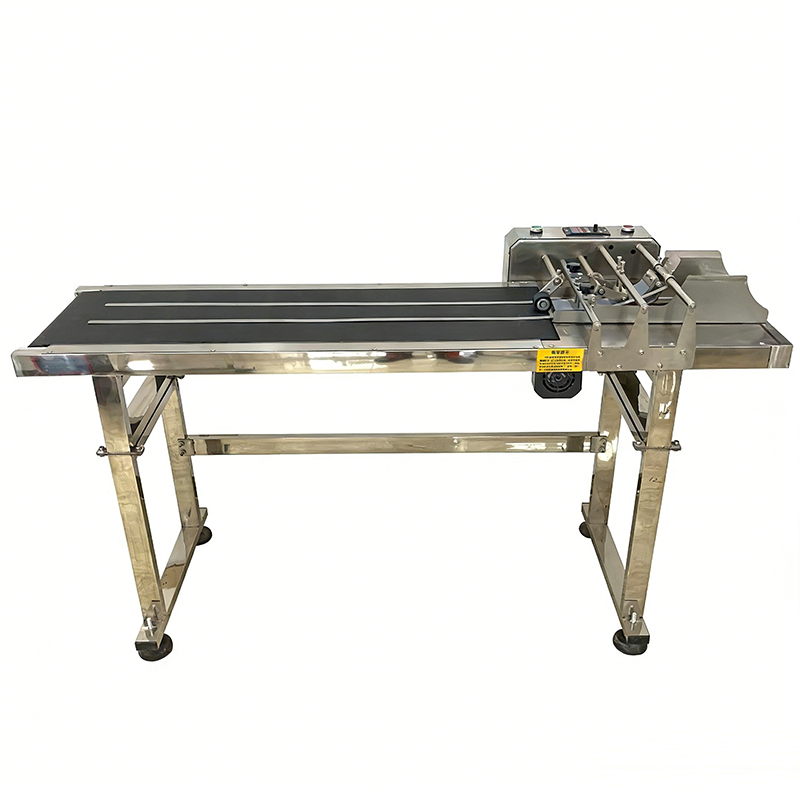
A paging machine resolves this by acting as a synchronization hub: it converts discrete sensor inputs—proximity switches, encoders, and vision system outputs—into structured, time-aware events. It triggers the coder precisely when the product reaches the optimal marking position. This event-driven model eliminates polling latency, ensuring every mark lands accurately without manual intervention.
Time-Stamped Event Queuing and Priority-Based Page Dispatch
Modern coding workflows require more than basic trigger-and-print logic. A paging machine implements a time-stamped queue where each job carries microsecond-accurate arrival timing and a priority level (1 for routine tasks like date updates; up to 10 for safety-critical actions such as recall-specific serialization). This mirrors real-time OS scheduling—but optimized for physical marking operations.
During format changes—say, switching from large cartons to small blister packs—the system pre-buffers upcoming instructions and dispatches them via a high-priority page the moment the line controller confirms orientation. The marking head receives the exact payload within the same motion cycle, eliminating missed prints and reducing changeover scrap by up to 30%. This deterministic, audit-ready sequencing transforms chaotic trigger streams into predictable, traceable output.
Paging Machine Integration with Industrial Robotics for Multi-Format Marking
Robotic Arm Latency During Format Switching
In multi-format lines, robotic arms often pause 200–500 ms per SKU switch while the marking controller reinitializes parameters—a delay that disrupts throughput and risks print misalignment. A paging machine eliminates this latency by staging mark-specific data ahead of the robot’s motion cycle. Using a time-stamped dispatch queue synchronized with the robot’s motion controller, it delivers the next format’s instructions precisely as the arm initiates its approach. No hardware modifications are needed. The result is 20–40% faster changeovers and consistent registration accuracy across all formats.
Pre-Buffered Paginated Instruction Sets for Seamless Handoff
Pre-buffered paginated instruction sets enable truly seamless multi-format transitions by loading complete mark configurations—including robotic trajectories and print templates—into the paging machine’s memory before production begins. Each “page” corresponds to a unique marking format and its associated motion logic. When a format-switch signal arrives from the PLC or vision system, the paging machine instantly pushes the next pre-assembled instruction page to both the marking head and robot controller over a prioritized channel. This avoids on-the-fly reprogramming and prevents idle cycles entirely—preserving timing integrity and positional accuracy during complex shifts between barcodes, QR codes, and alphanumeric patterns on variable-sized packages.
Bridging PLCs and Marking Devices via OPC UA–Compliant Paging Gateways
Protocol Mismatches Between PLCs and Inkjet Coders
Legacy PLCs commonly use Modbus RTU or Profibus, while modern inkjet coders increasingly depend on Ethernet/IP or OPC UA. This protocol mismatch causes data frame errors and delayed triggers—leading to misaligned or missing codes on high-speed lines. An OPC UA–compliant paging gateway bridges this gap by translating between industrial protocols and queuing marking commands intelligently. It ensures variable data—expiry dates, lot numbers, serials—reaches the coder in correct sequence, even when PLCs and coders operate on incompatible stacks.
Paging Gateways as Middleware for Reliable Code Delivery
Paging gateways serve as intelligent middleware: they buffer, time-stamp, and prioritize marking instructions before forwarding them via OPC UA. Rather than exposing coders directly to erratic PLC signals, the gateway queues each job as a paginated message and releases it only after the coder confirms readiness. This pre-validated handshake prevents buffer overflows and guarantees atomic delivery—even during burst production or rapid format switches. The outcome is consistent print quality and elimination of phantom triggers that cause duplicate or skipped marks. For operators, integration simplifies dramatically: the gateway abstracts away multi-vendor protocol complexity.
Reducing Operational Downtime with Predictive, Paginated Anomaly Response
In automated coding lines, a single undetected printhead clog or conveyor misalignment can halt production—costing up to $260,000 per hour in unplanned downtime (2023 industry report). Predictive analytics now monitors real-time sensor streams—including ink viscosity, motor torque, and temperature—to detect subtle anomalies before they escalate. The critical link between detection and action is the paging machine: when a predictive model identifies rising fault probability, it dispatches a priority page directly to the technician’s handheld device—bypassing centralized dashboards and email inboxes. Unlike delayed alerts, paginated responses guarantee immediate visibility, enabling targeted interventions—like a 10-minute nozzle cleaning—during natural pauses instead of full breakdowns.
The shift from reactive to predictive, paging-driven intervention yields measurable improvements:
| Response Type | Average Unplanned Downtime | Technician Notification Lag | Mean Time to Repair |
|---|---|---|---|
| Reactive (post-failure) | 8–12 hours | Not applicable | 4+ hours |
| Sensor-based alerts only (no paging) | 3–5 hours | 15–40 minutes | 1.5 hours |
| Predictive, paginated anomaly response | 30–60 minutes | <30 seconds | 10–25 minutes |
Facilities report a 30–50% reduction in unplanned downtime. In one beverage canning line, integrating a paging machine with vibration sensors cut printer-related stoppages from 14 to just 2 per month—simply by enabling on-the-spot adjustments before marks became illegible. This fusion of predictive intelligence and instant, actionable paging transforms coding operations from fragile to resilient—maintaining throughput without constant manual oversight.
FAQ
What is a paging machine used for?
A paging machine acts as a synchronization hub in manufacturing operations. It converts sensor inputs into time-aware events to ensure precise marking at the optimal position on production lines.
How does a paging machine reduce downtime?
By enabling predictive, paginated anomaly responses, a paging machine alerts technicians to issues before they escalate, ensuring minimal disruption and faster problem resolution.
How do paging machines integrate with robotics?
Paging machines synchronize marking instructions with robotic motion cycles through pre-buffered and time-stamped data, which results in seamless multi-format transitions.
Can a paging machine handle multiple formats?
Yes, pre-buffered paginated instruction sets allow paging machines to handle variable markings across multiple formats, ensuring accuracy and efficiency during format changes.
What role do paging gateways play in industrial configurations?
Paging gateways bridge protocol mismatches between legacy PLCs and modern inkjet coders, queuing and delivering marking commands reliably to ensure consistent print quality.