
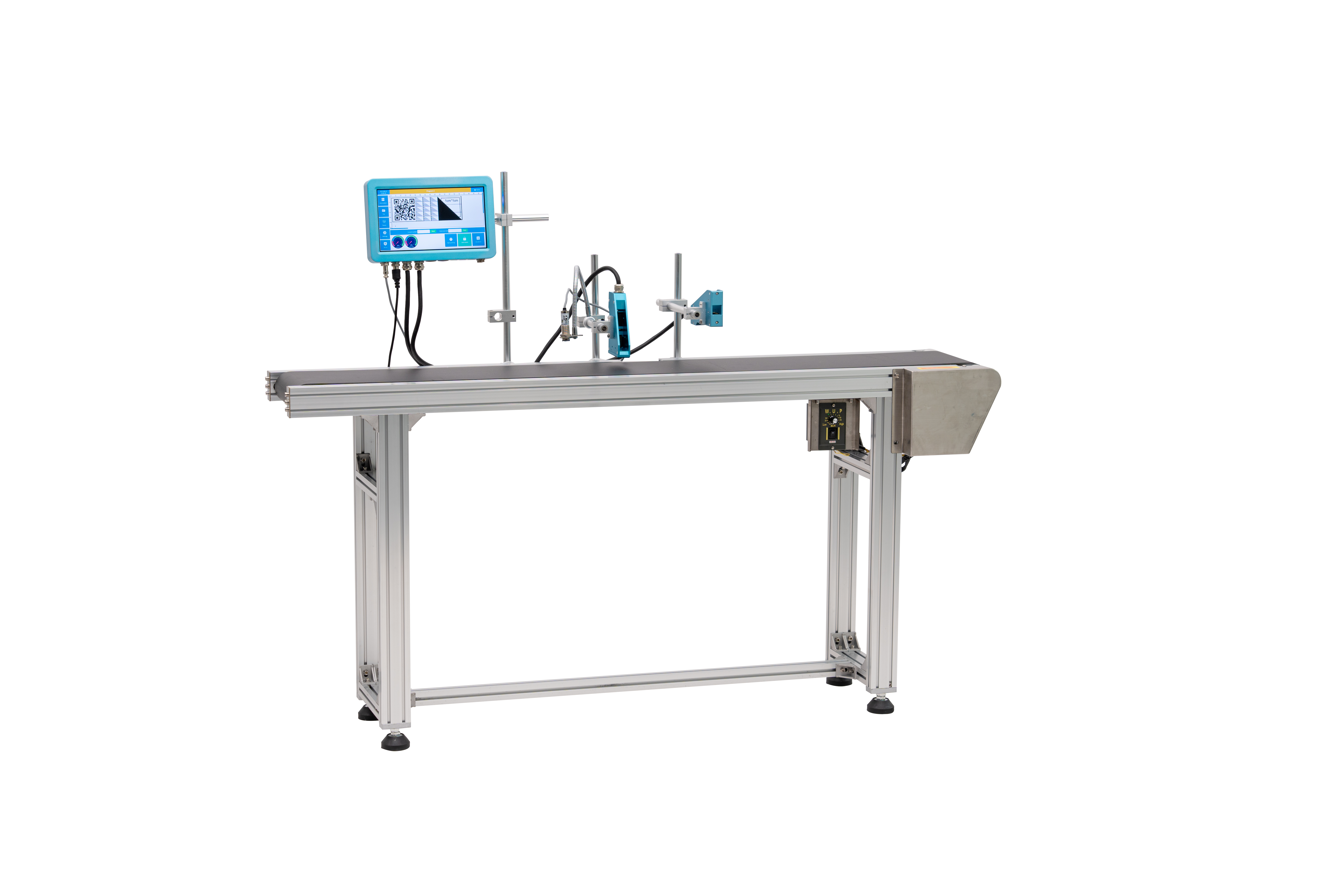
How TIJ Printers Achieve Reliable 600 DPI Resolution in Industrial Environments
Thermal Bubble Dynamics and Drop-on-Demand Precision
TIJ printers hit that sweet spot of 600 DPI resolution by creating tiny thermal bubbles in just the right way. The process works when those little microheaters heat up the ink fast enough to create vapor bubbles that push out droplets ranging from about 2 to 10 picoliters each. These droplets land exactly where they need to go, within about 5 microns of their target spot. What makes TIJ special is how it only fires when needed, which cuts down on wasted ink and keeps text looking crisp even on tricky surfaces like curved bottles or vibrating production lines. Compared to CIJ technology, TIJ doesn't need all those extra parts like charge plates, gutters, or powerful pumps. This simpler design makes installation easier and generally lasts longer too. Industrial grade TIJ systems can print readable codes at impressive speeds, often going well past 76 meters per minute in factory settings.
Zero Mechanical Wear Design: Why TIJ Printers Sustain Line Width Consistency (<5 μm) on PET and Other Challenging Substrates
TIJ printheads don't have any moving parts at all—not pistons, diaphragms, or those piezoelectric actuators found in other systems—which means they just don't wear out over time like traditional heads do. The shape of the nozzles stays pretty much exactly the same even after millions of print jobs, so lines stay consistently thin (below 5 microns) whether printing for a few hours or running continuously for weeks. Tests show something remarkable too: most TIJ systems maintain dot placement accuracy within about 0.3% variance after roughly 10,000 hours of operation. When paired with specially formulated solvent based inks that grab onto surfaces quickly, these stable printheads eliminate feathering problems on tricky materials such as PET film, HDPE plastics, and metal coatings. Contrast this with conventional CIJ systems which tend to drift off course or get clogged up regularly, requiring constant adjustments and maintenance downtime.
TIJ Printer Performance Across Diverse Industrial Substrates
Optimized Ink-Substrate Interaction on Porous, Semi-Porous, and Non-Porous Surfaces
TIJ printers consistently produce 600 DPI quality across different types of materials because they match the right ink chemistry to how each substrate behaves. When printing on porous surfaces like cardboard or regular paper, these printers use quick penetrating aqueous inks that soak in evenly without causing any bleeding issues. For semi-porous stuff like coated labels or treated plastic surfaces, hybrid solvent inks work best since they strike a good balance between controlled penetration and fast drying time to avoid smears. Non-porous materials present a bigger challenge though. Substrates such as PET and HDPE require special solvent based inks that create those strong molecular level bonds almost instantly. This is important because these inks won't smear even when moving at high speeds along conveyor belts, plus they stand up to chemicals and wear over time which keeps products looking good throughout their shelf life. What makes all this possible is the thermal bubble jetting system inside TIJ printers. It places each droplet with incredible precision down to under 5 micrometers no matter what kind of surface it's dealing with. That's why we see sharp clear barcodes printed directly onto corrugated boxes and legible text meeting UDI requirements on IV bags and other medical packaging where clarity really counts.
Meeting Rising Demand for Glass and Anodized Aluminum Coding (32% CAGR, 2023–2028)
The market for direct part marking on glass and anodized aluminum is expanding rapidly, with growth rates hitting around 32% annually between 2023 and 2028. This surge comes primarily from regulations in pharmaceuticals requiring serial numbers and the need for distinctive branding in premium beverages. TIJ printers tackle these demands using special pigment inks that cure instantly, delivering excellent visibility and lasting against UV exposure. When dealing with curved glass containers, the printer automatically adjusts its printhead position to keep the image quality steady at 600 DPI resolution, avoiding issues like ink pooling or distorted prints. With anodized aluminum surfaces common in things like drink cans and makeup packaging, specially formulated inks actually work their way into the oxide layer to produce markings that won't wash off even after condensation builds up or during sterilization procedures. Real world tests indicate TIJ technology runs about three times quicker than traditional pad printing methods on these materials, all while meeting the strict ISO/IEC 15415 Grade A standards for verification. That makes TIJ not just fast but also a smart long term solution for companies needing to track products across supply chains.
TIJ Printers for Regulated Industries: Pharma Serialization and UDI Compliance
Low-Migration Inks + Clean Cartridge Architecture = ISO 15378 and FDA 21 CFR Part 11 Readiness
TIJ (thermal inkjet) printers have become essential tools for pharmaceutical companies and makers of medical devices who need to satisfy strict regulations around material safety and accurate record keeping. These printers use special low-migration inks that don't leave behind harmful compounds on drugs or their packaging materials. This matters because patients' health depends on it, and ISO 15378 has pretty clear guidelines about what's acceptable for direct contact packaging. The way these printers work is actually quite clever. They come with sealed cartridges that get tossed after one use, so there aren't any moving parts creating particles inside the ink system. Studies looking at packaging safety show this design cuts down contamination risks by almost 90% compared to older printing technologies from back in the day. Beyond just being clean, this setup lets manufacturers print important information like serial numbers and UDI codes directly onto things like vials, syringes, and those little plastic blister packs we see everywhere. And let's not forget about the documentation side of things either. With built-in audit trails, digital signatures, and secure logs, these systems help companies stay compliant with FDA rules under 21 CFR Part 11. That means less paperwork headaches during audits and smoother operations throughout a product's entire life cycle.
TIJ Printers Enable High-Grade 2D Code Traceability at Production Speed
Pixel-Accurate Dot Placement for ISO/IEC 15415 Grade A Verification at 10 Mil Resolution
TIJ printers deliver industrial level traceability thanks to their precise drop ejection system based on semiconductor technology. The printheads feature 600 DPI nozzle arrays that shoot ink droplets exactly when needed through heat controlled resistors. These systems can place tiny 10 mil (about 0.25 mm) dots with incredible accuracy of plus or minus 5 micrometers. What makes this special is that it's a contact free printing method so there's no damage to materials even when running at impressive speeds of 300 meters per minute. This maintains the shape of each printed dot which matters a lot for meeting the strict ISO/IEC 15415 standards required for top quality barcodes. Since there are no moving parts wearing out over time, the width of printed lines stays consistent within 5 micrometers throughout long production cycles. That kind of reliability supports scan rates above 99.9% for those critical Data Matrix and QR codes found on everything from medicine packages to electronic devices and car parts. And best of all, TIJ technology manages to print these verification patterns flawlessly while keeping up with full production speeds, making it possible to comply with UDI regulations without slowing down manufacturing operations.
FAQ
What makes TIJ printers suitable for various industrial substrates?
TIJ printers are versatile due to their optimized ink-substrate interaction, which matches the right ink chemistry to how each substrate—porous, semi-porous, or non-porous—behaves.
Why are TIJ printers ideal for pharmaceutical and medical device industries?
TIJ printers are essential for these industries because they utilize low-migration inks and a clean cartridge architecture, complying with ISO 15378 and FDA 21 CFR Part 11 standards.
How do TIJ printers maintain DPI resolution at high speeds?
TIJ printers utilize precise drop ejection systems and no moving parts, ensuring consistent resolution and traceability even at speeds up to 300 meters per minute.